Slang moves faster than trends on your feed. One week a word is everywhere, the next it feels outdated. Right now, “tweaking” is showing up in TikTok comments, Discord chats, and late-night texts. If you’ve seen it and wondered what it really means in 2026 digital culture, you’re not alone. This word has evolved far beyond its original meaning and now carries emotional, social, and meme-driven layers. Understanding it isn’t just about vocabulary—it’s about decoding how Gen Z communicates online.
⭐ ULTRA FEATURED SNIPPET BLOCK ⭐
What does tweaking mean in slang?
→ “Tweaking” in slang means acting overly anxious, unreasonable, excited, or mentally overwhelmed—often in a chaotic or exaggerated way. It can describe someone overreacting, stressing hard, or behaving erratically, depending on context.
Quick Meaning Points:
• Tone: Mostly negative or chaotic, sometimes playful
• Who uses it most: Gen Z and gamers
• Where used most: TikTok, Discord, group chats
• Example sentence: “Bro stop tweaking, it’s not that serious.”
Core Meaning Explained
At its core, “tweaking” in modern slang describes a heightened mental or emotional state. It’s not calm, balanced, or controlled—it’s the opposite.
Think of it like this:
When someone is “tweaking,” they’re reacting too intensely. That reaction might be panic, excitement, suspicion, or stress. The word captures that chaotic energy in one punchy expression.
In older contexts, “tweaking” was linked to extreme behavior caused by substances. But Gen Z has repurposed it into something broader and more relatable.
Now it can mean:
- Overthinking a small issue
- Acting unreasonable without reason
- Getting overly hyped or emotional
- Losing composure in a funny or dramatic way
The flexibility of the word is what makes it powerful in modern slang usage.
Origin and Evolution Timeline
Early internet roots
“Tweaking” originally came from drug culture slang, referring to erratic or hyper behavior. It carried a heavy, serious tone tied to instability.
Meme spread phase
As internet humor evolved, users began applying “tweaking” in exaggerated, ironic ways. Memes started showing people overreacting with captions like “he tweaking.”
Mainstream adoption
TikTok and gaming communities pushed the term into everyday use. It became less about substances and more about emotional reactions.
2026 current usage
Now, “tweaking” is fully mainstream. It’s used casually in texts, comments, and videos. The meaning depends on tone, but it usually signals someone acting out of control—mentally or emotionally.
Tweaking Meaning Gen Z
In Gen Z slang, tweaking is commonly used to describe someone who is acting irrationally, overreacting, or behaving in an unusually dramatic way. Rather than its older literal meanings, Gen Z typically uses the term humorously to suggest that someone is “doing too much” or responding far more intensely than the situation requires.
Across TikTok, Snapchat, Instagram, Discord, and X, the phrase is often used playfully between friends. Comments such as “You’re tweaking” or “Bro is tweaking” usually imply that a person’s reaction seems exaggerated, unexpected, or difficult to understand. As with many Gen Z expressions, the meaning is shaped by context, tone, and the nature of the conversation.
Nah You Tweakin Meaning
The expression “Nah, you tweakin'” has become one of the internet’s most recognizable reaction phrases. It is commonly used to reject an opinion, question someone’s judgment, or suggest that another person’s statement is unreasonable or unbelievable.
The phrase gained widespread popularity through memes, short-form videos, livestreams, and gaming communities before spreading across TikTok and other social media platforms. Today, it functions as a humorous way of saying, “I completely disagree,” “That doesn’t make sense,” or “You’re overreacting.”
Tweakin Song
The term “tweakin'” appears frequently in modern rap, hip-hop, and viral music because it conveys heightened emotions, mental pressure, excitement, or chaotic behavior. Different artists use the word with different intentions, allowing listeners to interpret its meaning based on the lyrics and overall theme of the song.
Its popularity in music has also contributed to its widespread adoption on TikTok, where trending audio clips have introduced the expression to millions of younger users. As a result, tweakin’ has become both a musical expression and a common piece of internet slang.
Tweaking Meme
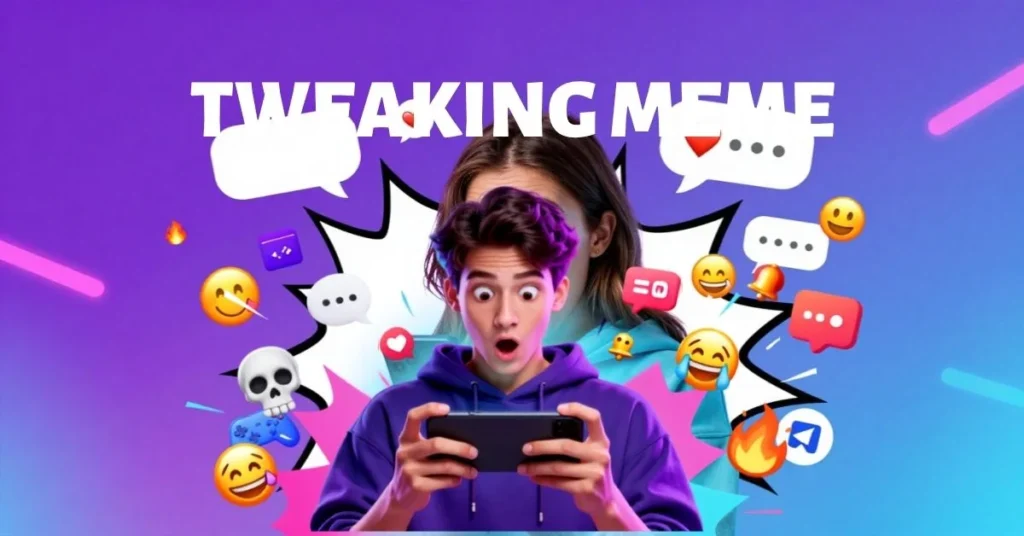
The “tweaking” meme has become a staple of internet humor, particularly on TikTok, Reddit, Instagram, and X. It is typically used to exaggerate situations in which someone appears to be overthinking, panicking, making irrational decisions, or reacting dramatically to ordinary events.
Captions such as “Bro is tweaking” or “Nah, you’re tweakin'” are often paired with humorous videos or reaction images, making the phrase a shorthand way of describing exaggerated behavior. The meme’s popularity reflects Gen Z’s preference for expressive, fast-paced communication built around shared internet culture.
Gen Z Slang
Among Gen Z, slang is more than casual vocabulary—it is a way of expressing identity, humor, and participation in online communities. Words such as tweaking, rizz, delulu, cooked, NPC, mid, and no cap have become part of everyday digital conversations because they communicate complex emotions with just a few words.
As online culture evolves, these expressions continue to change in meaning and popularity. Understanding Gen Z slang requires more than memorizing definitions; it involves recognizing the context, platform, and cultural trends that shape how these words are used in modern digital communication.How Gen Z Uses Tweaking Today
TikTok
Used in captions and comments to call out dramatic reactions.
Example: “Why she tweaking over a text?”
Discord
Common in gaming chats when someone panics or overreacts mid-game.
Example: “Relax bro, you tweaking.”
Gaming chat
Often used to mock teammates who are stressing too much or making chaotic moves.
Instagram comments
Appears under viral posts where someone is acting intense or irrational.
Text messages
Used casually among friends to check or joke about behavior.
Example: “You good? You tweaking rn.”
Real Chat Style Examples
Friend 1:
“Why you calling me 5 times??”
Friend 2:
“Because you not replying 😭”
Friend 1:
“Bro you tweaking relax”
Friend 1:
“I think they talking about me”
Friend 2:
“No they not 💀 you tweaking again”
Friend 1:
“I just drank 3 coffees I can’t sit still”
Friend 2:
“Yeah you definitely tweaking”
These examples show how natural and flexible the slang feels in real conversations.
Similar Slang Comparison Section
| Slang Word | Meaning | Tone | Difference from “Tweaking” |
|---|---|---|---|
| Bugging | Overreacting or acting impulsive | Negative | More aggressive, less playful |
| Tripping | Acting irrational or dramatic | Neutral | Slightly milder than tweaking |
| Wilding | Acting out of control | Strong | More extreme behavior |
| Losing it | Mentally overwhelmed | Negative | More serious tone |
| Acting up | Misbehaving or emotional | Neutral | Less intense than tweaking |
“Tweaking” stands out because it blends humor with chaos. It can sound serious or playful depending on delivery.
Psychological and Social Meaning
Slang like “tweaking” isn’t random—it reflects how people think and interact online.
Why people use this slang
It simplifies complex emotions. Instead of explaining anxiety or stress, one word captures the entire mood.
Social validation behavior
Calling someone “tweaking” often seeks agreement from others. It turns individual reactions into shared judgments.
Online identity signaling
Using current slang shows cultural awareness. It signals that you’re part of digital culture and understand meme language.
It also creates emotional distance. Saying “you tweaking” feels lighter than saying “you’re overreacting,” even if they mean the same thing.
When Not To Use This Slang
Even though it’s popular, it doesn’t fit everywhere.
Professional situations
Avoid it in emails, meetings, or workplace communication.
Older audience
Some people may misunderstand or take it literally.
Formal writing
It’s not appropriate for academic or serious content.
Context matters. What sounds funny in a group chat can sound disrespectful in the wrong setting.
Is This Slang Still Trending in 2026?
Yes—and it’s still growing.
“Tweaking” has strong staying power because it adapts easily. It works in humor, drama, and casual conversation.
Trend status
- Highly active on TikTok and gaming platforms
- Frequently used in meme captions
- Still evolving in meaning
Future prediction
The word may expand into new variations or tones, but the core idea—chaotic emotional behavior—will likely remain.
Slang that describes emotions tends to last longer, and “tweaking” fits that pattern perfectly.
Pro Tips to Use Naturally
• Use it casually, not aggressively
• Match the tone of your conversation
• Avoid overusing it in serious discussions
• Pair it with humor for best effect
• Keep it short—don’t over-explain
Natural use is all about timing and context.
Common Mistakes Section
Using it too seriously
It’s mostly playful—don’t make it sound harsh unless intentional.
Misunderstanding tone
It can sound rude if used in the wrong moment.
Overusing it
Repeating it too often makes it lose impact.
Using it in formal settings
It doesn’t belong in professional communication.
Assuming one fixed meaning
Context changes everything with this slang.
Related Slang Words Mini Glossary
• Delulu – Being unrealistic or overly hopeful
• Mid – Average or unimpressive
• Sus – Suspicious behavior
• Slay – Doing something confidently or impressively
• Bet – Agreement or confirmation
• Cap – A lie or false statement
• No cap – Truth or honesty
• Vibe check – Assessing someone’s energy
• Lowkey – Subtle or not obvious
These words often appear alongside “tweaking” in modern slang conversations.
Frequently Asked Questions
What does tweaking mean in text?
It means someone is overreacting, anxious, or acting chaotic in a situation.
Is tweaking a bad word?
Not necessarily—it depends on tone. It can be playful or slightly negative.
What does tweaking mean on TikTok?
It describes dramatic or exaggerated behavior in videos or comments.
Can tweaking be positive?
Sometimes, if used humorously to describe excitement or energy.
Why do people say you tweaking?
To point out that someone is reacting too strongly or irrationally.
Conclusion
“Tweaking” is more than just a slang word—it’s a snapshot of how people express emotion in digital spaces. It captures stress, humor, chaos, and exaggeration all at once. That’s why it works so well across TikTok, gaming chats, and everyday texting. In 2026, communication is fast, emotional, and meme-driven. Words like this thrive because they simplify complex feelings into something instantly recognizable. If you understand how and when to use “tweaking,” you’re not just following a trend—you’re speaking the language of modern internet culture. Share it, use it wisely, and stay in tune with how online expression keeps evolving.

Basharat Ali is a language and digital culture writer at MeaningsOrbit.com, with 5+ years of experience explaining slang, text abbreviations, Gen Z language, and internet expressions. His goal is to make confusing words simple, clear, accurate, and easy for everyone to understand.