Viral Hook Introduction
Slang moves faster than trends on your feed. One day a word feels normal, the next it’s everywhere—comment sections, TikTok captions, gaming chats. “Bop” is one of those words blowing up again in 2026 digital culture.
You’ve probably seen it under videos, heard it in music discussions, or spotted it in casual texts. But here’s the twist: its meaning shifts depending on context, tone, and platform.
Right now, “bop meaning slang TikTok” is trending because Gen Z keeps remixing language to express vibe, identity, and social status.
If you don’t understand it, you risk missing the tone of conversations entirely. This guide breaks down exactly what “bop” means today, how people actually use it, and when it can backfire.
⭐ ULTRA FEATURED SNIPPET BLOCK ⭐
What does bop mean in slang?
→ In modern slang, “bop” usually refers to a really good song or something enjoyable and catchy. On TikTok and social media, it can also mean a person (often a girl) who is perceived as overly flirtatious or attention-seeking, depending on tone and context.
Quick Meaning Points:
• Tone: Positive or Negative (context-based)
• Who uses it most: Gen Z, TikTok users, music fans
• Where used most: TikTok, Instagram, Discord, text messages
• Example sentence: “This song is such a bop” or “He called her a bop in the comments”
Core Meaning Explained
“Bop” is one of those rare slang words with dual meanings—and that’s exactly why it confuses people.
Positive meaning
The most widely accepted slang definition is simple:
A “bop” is a great song.
If something is catchy, makes you want to dance, or feels replay-worthy, people call it a bop. This usage has been around for years and remains dominant in music culture.
Example:
“That track is a bop, I’ve had it on repeat all day.”
Negative meaning
In newer internet slang, especially on TikTok, “bop” can also refer to a person—usually a woman—implying promiscuous or attention-seeking behavior.
This version is more controversial and context-heavy. Tone matters a lot here. It can come across as judgmental or even disrespectful.
Example:
“They’re calling her a bop in the comments.”
Why the confusion exists
Because both meanings exist at the same time. One is about music, the other about social behavior. Without context, the word can easily be misunderstood.
Bop Meaning in Slang TikTok
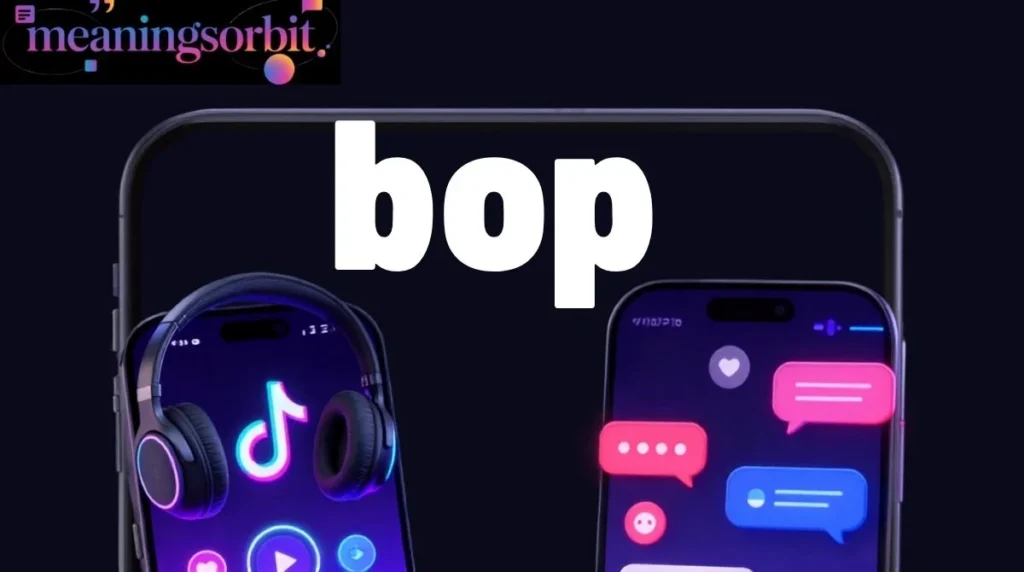
On TikTok, bop is a versatile slang term whose meaning depends entirely on the context of the conversation. Traditionally, the word is used to describe a song that is exceptionally catchy, enjoyable, or worthy of being played repeatedly. However, in recent years, certain online communities have adopted bop as a slang label for a person, particularly in discussions about dating and social interactions.
This newer usage has become controversial because it is often used to make assumptions or negative judgments about someone’s personal life. As a result, many creators and online communities discourage using the term to label individuals. When encountering bop on TikTok, always consider the video’s theme, captions, and comments before deciding which meaning is intended.
Bop Meaning in Slang Urban Dictionary
Urban Dictionary contains several user-submitted definitions for bop, reflecting how internet slang changes over time. The most widely accepted definition describes bop as a song with an infectious beat that people enjoy listening to repeatedly. However, newer entries also document its use as slang referring to a person’s perceived dating or social behavior.
Because Urban Dictionary is based on community submissions rather than formal language standards, definitions may differ significantly. The safest approach is to interpret bop based on the context in which it appears instead of relying on a single definition.
Bop Meaning in Slang Reddit
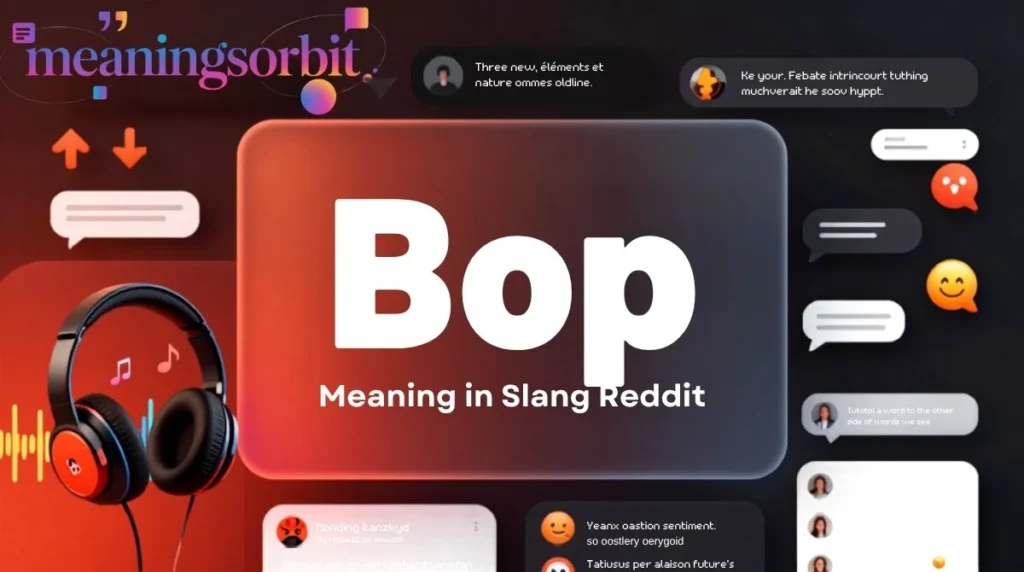
Reddit discussions demonstrate that bop has different meanings across online communities. In music-related subreddits, users almost always use the word positively to describe songs that are catchy, memorable, and worth replaying. In contrast, slang and pop-culture discussions often examine the newer social meaning of bop, including how the word has evolved on platforms like TikTok.
Many Reddit users emphasize that slang constantly changes, and the meaning of bop depends on the community, audience, and conversation rather than a fixed definition.
What Is a Bop Female on TikTok?
The phrase bop female is an internet slang expression that appears in some TikTok videos and comment sections. It is generally used to label or criticize a girl’s perceived dating or social behavior rather than describe her actual character. Because the term can be judgmental, disrespectful, or offensive, it should be interpreted carefully and avoided in respectful conversations.
Understanding the context is important, as the phrase reflects online slang trends rather than an objective or accurate description of a person.
Bop Meaning in Slang Music
In music culture, bop has a completely positive meaning. It refers to a song that is catchy, energetic, memorable, and enjoyable enough that listeners want to play it repeatedly. Whether discussing pop, hip-hop, R&B, or electronic music, people commonly describe their favorite tracks as bops when they have an irresistible rhythm or melody.
Among all its definitions, this remains the most universally accepted and widely used meaning of bop, making it a staple term in music reviews, playlists, and social media discussions.
Origin and Evolution Timeline
Early internet roots
“Bop” originally comes from music culture. The word dates back decades, often used to describe upbeat songs. It became more popular in online music discussions and fan communities.
Meme spread phase
Around the late 2010s and early 2020s, TikTok and meme culture revived the term. Users began casually calling songs “bops,” especially in short-form video content.
Mainstream adoption
By the early 2020s, “bop” was fully mainstream. It appeared in playlists, captions, and influencer content. Music creators even used it in marketing.
2026 current usage
Now in 2026, the meaning has split:
• Music-related meaning remains strong and positive
• Social slang meaning has emerged and spread on TikTok
• Context determines interpretation more than ever
This dual meaning reflects how fast Gen Z reshapes language.
How Gen Z Uses Bop Today
TikTok
On TikTok, “bop” is everywhere.
• Used to hype songs in videos
• Appears in captions like “This is a bop”
• Also used in comments to label people (sometimes negatively)
Tone depends on the creator and audience.
Discord
In Discord servers:
• Mostly used for music discussions
• Rarely used negatively unless in joking tone
• Often part of casual chat slang
Example:
“Drop some bops in the playlist channel.”
Gaming chat
Gamers use “bop” in a lighter way:
• Refers to good background music
• Sometimes used jokingly about gameplay
Example:
“This lobby music is a bop.”
Instagram comments
On Instagram:
• Mostly positive usage
• Seen under reels and music clips
• Less controversial than TikTok usage
Example:
“Instant bop 🔥”
Text messages
In texting:
• Casual and friendly
• Almost always refers to music
Example:
“You heard this? Total bop.”
Real Chat Style Examples
Friend 1:
Yo have you heard that new track?
Friend 2:
Yeah bro it’s a bop, I can’t stop playing it
Friend 1:
Why are people calling her a bop in the comments?
Friend 2:
It’s TikTok slang… kinda shady tbh
Friend 1:
Add more songs to the playlist
Friend 2:
Say less, only bops going in
Friend 1:
This edit goes hard
Friend 2:
Fr the song choice is a bop
Similar Slang Comparison Section
| Slang Word | Meaning | Tone | Usage Context |
|---|---|---|---|
| Bop | Catchy song or controversial label for a person | Positive / Negative | Music, TikTok |
| Banger | Extremely good song | Positive | Music |
| Slaps | Sounds amazing | Positive | Music |
| Mid | Average or boring | Negative | Reviews |
| Fire | Very good or exciting | Positive | General slang |
Key differences
• “Bop” is more casual than “banger”
• “Slaps” feels more energetic
• “Mid” is the opposite of a bop
• “Fire” is broader and not limited to music
Psychological and Social Meaning
Slang isn’t random. It reflects behavior, identity, and group dynamics.
Why people use “bop”
• Quick emotional expression
• Easy way to show taste or opinion
• Fits short-form content perfectly
Social validation behavior
Calling something a “bop” signals:
“I have good taste”
It’s a subtle way of aligning with trends and gaining approval.
Online identity signaling
Using slang correctly shows:
• You understand current culture
• You’re part of the in-group
• You stay updated with trends
Misusing it can do the opposite.
When Not To Use This Slang
Professional situations
Avoid using “bop” in:
• Emails
• Work presentations
• Formal communication
It sounds unprofessional.
Older audience
Some people may not understand the slang or may misinterpret it—especially the negative meaning.
Formal writing
Academic or business content should stick to clear language.
Is This Slang Still Trending in 2026?
Yes—but with nuance.
Current trend status
• Still widely used for music
• Increasing controversy in social usage
• Highly active on TikTok
Future prediction
The music meaning will likely stay.
The negative meaning may fade or evolve into something else, as Gen Z constantly updates slang.
Slang cycles are fast. Words either adapt or disappear.
Pro Tips to Use Naturally
• Use “bop” mainly for music to stay safe
• Pay attention to tone in comments
• Don’t overuse it—it loses impact
• Match the platform style (TikTok vs text)
• Observe how others use it before jumping in
Common Mistakes
Using it without context
You might accidentally sound rude or confusing.
Assuming only one meaning
Ignoring the negative meaning can lead to awkward situations.
Overusing the word
Repeating “bop” too much feels forced.
Using it in formal settings
It weakens your credibility.
Misinterpreting tone online
Text lacks tone, so meaning can flip quickly.
Related Slang Words Mini Glossary
• Banger – A powerful, high-energy song
• Slaps – Sounds really good
• Mid – Average or unimpressive
• Fire – Excellent or exciting
• Vibe – The overall feeling or mood
• Drip – Fashion style or outfit
• NPC – Someone acting basic or predictable
• Delulu – Delusional in a playful way
• Aura – Personal energy or presence
Frequently Asked Questions
People Also Ask
What does bop mean for a girl on TikTok?
On TikTok, bop can be a slang term used to describe a girl in a judgmental or disrespectful way, depending on the context.
What is a bop slang in Urban Dictionary?
Urban Dictionary commonly defines bop as either a catchy song or a slang term with different meanings based on the conversation.
What does bop mean in Gen Alpha slang?
In Gen Alpha slang, bop usually refers to a song that is catchy, fun, and enjoyable to listen to.
What is a bop girl on Instagram?
A bop girl on Instagram is a slang term some users use to make assumptions about a girl’s dating or social behavior.
Is “bop” always a negative slang term?
No, bop can describe either a great song or, in some contexts, be used as slang about a person.
Power Conclusion
Language on the internet isn’t just about words—it’s about identity, timing, and context. “Bop” perfectly shows how a single term can evolve into multiple meanings at once. In 2026, it’s still a go-to word for describing great music, but its newer usage adds complexity that you can’t ignore.
Understanding slang like this gives you an edge. You communicate better, avoid misunderstandings, and stay connected to digital culture. The key is simple: read the room, watch the tone, and use it naturally.
If you want to sound current without trying too hard, stick to the positive meaning and let context guide you. And next time you hear a song on repeat, you already know what to call it.

Basharat Ali is a language and digital culture writer at MeaningsOrbit.com, with 5+ years of experience explaining slang, text abbreviations, Gen Z language, and internet expressions. His goal is to make confusing words simple, clear, accurate, and easy for everyone to understand.